 New: AI Music Generator — create songs from lyrics
'%3e%3cg%20id='Group_17091'%20data-name='Group%2017091'%20transform='translate(53%20758)'%3e%3cpath%20id='Path_178899'%20data-name='Path%20178899'%20d='M51.713,62.718h-15.3a.7.7,0,0,1-.584-.328C33.8,59.247,33.65,53.2,33.638,52.3q0-.053,0-.106a.73.73,0,0,1,.705-.75h0a.729.729,0,0,1,.707.747c0,.005,0,.049,0,.128a3.749,3.749,0,1,0,7.489-.125.729.729,0,0,1,.707-.75h1.624a.729.729,0,0,1,.707.75,3.749,3.749,0,1,0,7.489.119c0-.075,0-.117,0-.122a.729.729,0,0,1,.707-.747h0a.73.73,0,0,1,.705.75c0,.036,0,.071,0,.106-.012.9-.167,6.943-2.186,10.086a.7.7,0,0,1-.584.328Zm0,0'%20transform='translate(-32.06%20-49.036)'%20fill='%23fff780'/%3e%3cpath%20id='Path_178900'%20data-name='Path%20178900'%20d='M265.721,51.449h0a.729.729,0,0,0-.707.747c0,.005,0,.047,0,.122a3.749,3.749,0,1,1-7.489-.119.729.729,0,0,0-.707-.75H256v11.27h7.652a.7.7,0,0,0,.584-.327c2.019-3.143,2.174-9.189,2.186-10.086,0-.035,0-.071,0-.106a.73.73,0,0,0-.706-.75Zm0,0'%20transform='translate(-244.004%20-49.037)'%20fill='%23ffc02e'/%3e%3cpath%20id='Path_178901'%20data-name='Path%20178901'%20d='M209.565,0a2.284,2.284,0,1,0,2.284,2.284A2.286,2.286,0,0,0,209.565,0Zm0,0'%20transform='translate(-197.565)'%20fill='%23ffc02e'/%3e%3cpath%20id='Path_178902'%20data-name='Path%20178902'%20d='M256,0V4.567A2.284,2.284,0,0,0,256,0Zm0,0'%20transform='translate(-244.004)'%20fill='%23ffa73b'/%3e%3cpath%20id='Path_178903'%20data-name='Path%20178903'%20d='M2.284,37.6a2.284,2.284,0,1,0,2.284,2.284A2.286,2.286,0,0,0,2.284,37.6Zm0,0'%20transform='translate(0%20-35.836)'%20fill='%23ffc02e'/%3e%3cpath%20id='Path_178904'%20data-name='Path%20178904'%20d='M416.85,37.6a2.284,2.284,0,1,0,2.284,2.284A2.286,2.286,0,0,0,416.85,37.6Zm0,0'%20transform='translate(-395.133%20-35.836)'%20fill='%23ffa73b'/%3e%3cpath%20id='Path_178905'%20data-name='Path%20178905'%20d='M93.683,270.213h-15.3a.707.707,0,0,1-.707-.707V267.4H94.39v2.108A.707.707,0,0,1,93.683,270.213Zm0,0'%20transform='translate(-74.031%20-254.213)'%20fill='%23ffc02e'/%3e%3cpath%20id='Path_178906'%20data-name='Path%20178906'%20d='M256,270.213h7.652a.707.707,0,0,0,.707-.707V267.4H256Zm0,0'%20transform='translate(-244.004%20-254.213)'%20fill='%23ffa73b'/%3e%3c/g%3e%3c/g%3e%3c/svg%3e) Upgrade Now
Upgrade NowA 10-minute video translated manually takes days and costs hundreds of dollars. The same video through an AI translator takes minutes and costs a fraction. But is the quality there yet?
Here's an honest comparison based on real workflows.
How Traditional Video Translation Works
The manual workflow has multiple steps, each typically handled by a different person:
- Transcription — someone listens and writes down every spoken word
- Translation — a translator converts the script to the target language
- Voice recording — a voice actor or narrator re-records the translated script
- Subtitle creation — timing subtitles to match the new audio
- Audio sync — aligning the new voice track with the original video
How AI Video Translation Works
AI video translators like Vismz handle the entire pipeline automatically:
- Speech recognition extracts the original audio
- Machine translation converts it to the target language
- AI voice generation creates natural-sounding narration
- Subtitles are auto-generated and timed
- Lip-sync adjusts mouth movements to match translated speech (available on premium plans)
Where AI Wins
Speed. No competition. AI is hundreds of times faster.
Cost. Traditional translation requires multiple paid professionals. AI tools charge per minute of video processed — typically 10-50x cheaper.
Scale. Translating one video into 10 languages manually is a major project. With AI, you select all 10 languages and click once.
Consistency. AI uses the same voice model across all languages, maintaining a consistent brand sound. Human narrators vary.
Where Traditional Still Has an Edge
Cultural nuance. Human translators understand idioms, humor, and cultural references that AI can miss. For content heavy on wordplay or culturally specific jokes, a human touch matters.
Legal and medical content. Precision is critical. A mistranslation in a legal contract or medical procedure video has real consequences. Traditional translation with human review is still the standard here.
High-end production. Feature films and premium commercials may want the creative control that comes with a human director and voice talent.
Who Should Use What
AI video translation is the clear choice for:
- YouTube creators expanding to international audiences
- Online course creators and educators
- Businesses localizing marketing and product videos
- Social media creators testing content in new markets
- News and informational content
- Legal depositions and contracts
- Medical training and patient-facing content
- High-budget film and TV production
- Content heavy on cultural references and wordplay
How Vismz Handles Translation
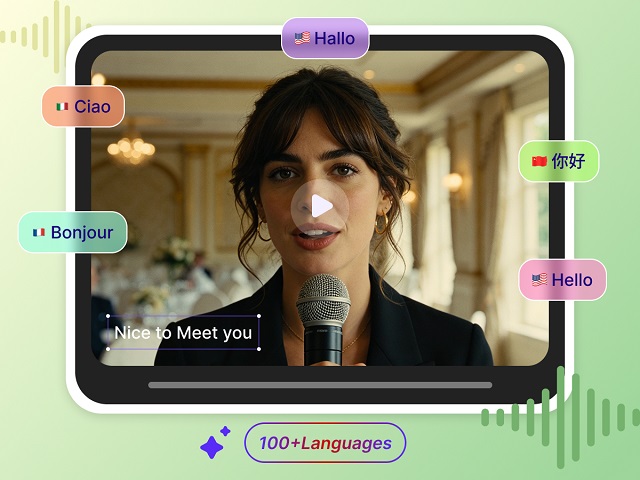
Upload your video → select source language → pick target languages (100+ available) → AI generates translated versions with subtitles and voiceover.
Vismz AI Video Translator also offers lip-sync adjustment on premium plans, so the speaker's mouth movements match the translated speech — making the result feel native rather than dubbed.
Bottom Line
For the vast majority of video content — educational, marketing, social, informational — AI translation is already the smarter choice. It's dramatically faster and cheaper, and the quality gap narrows every year. Traditional methods are now the exception, not the rule.

